
Artizan Woodworkers Supply

Wenge

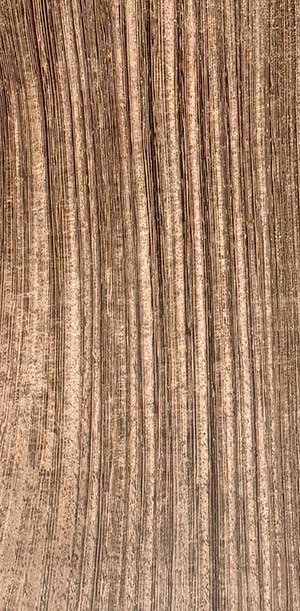
Wenge lumber, sourced from the Millettia laurentii tree native to Central Africa, is a high-density, exotic hardwood renowned for its nearly black appearance and dramatic grain
patterns.

Color Range

The heartwood is a deep chocolate-brown with very close, blackish veins. When finished, especially with oil, it can appear almost completely black, often used as a substitute for ebony.

Grain

It typically features a straight but coarse grain. Flatsawn boards often display bold "cathedral" arches, while quartersawn material shows a very consistent, straight, vertical look.

Texture

The wood has a rugged, very coarse texture with large, open pores that can be difficult to fill if a perfectly smooth finish is desired.

Other Names

Other names here.

Typical Uses

Conservation Status: Wenge is listed as Endangered on the IUCN Red List due to over- exploitation and habitat loss. It is not currently listed in the CITES Appendices, but its trade is subject to increasing international regulation. Ethical Sourcing: Buyers are encouraged to prioritize FSC or PEFC-certified lumber to ensure it was harvested from responsibly managed forests. Common Applications: Its strength and visual impact make it a premier choice for high-end flooring, custom cabinetry, musical instruments (particularly bass guitars and drums), and decorative inlays.

Weight

4.75

lbs /Bd. Ft. | 32.68% heavier than red oak (3.58 /bd. ft.)

Hardness

1630

Janka Rating | 26.36% harder than red oak (1290 psi)

Density

0.91

Specific Gravity | 42.19% more dense than red oak (.64)

Strength, Stability, and Durability

Durability: It is highly durable and naturally resistant to rot, decay, and termite attacks, making it suitable for both interior and exterior use. Stability: Once properly seasoned, it is exceptionally dimensionally stable with minimal movement in service.

Workability / Finishing

Machining Challenges: Due to its high density, wenge has a significant blunting effect on tools, necessitating sharp, carbide-tipped blades. It is known to sand unevenly because of the density differences between its light and dark streaks. Splinter Hazard: Wenge is notoriously splintery. Its splinters act like "little razors" and have an increased risk of going septic (infected) if they penetrate the skin. Health Precautions: The dust produced during cutting or sanding can be a sensitizer, potentially causing skin and eye irritation, respiratory issues, or abdominal cramps.

It seems we can’t find what you’re looking for.
Scroll to Top