
Tigerwood

Color Range
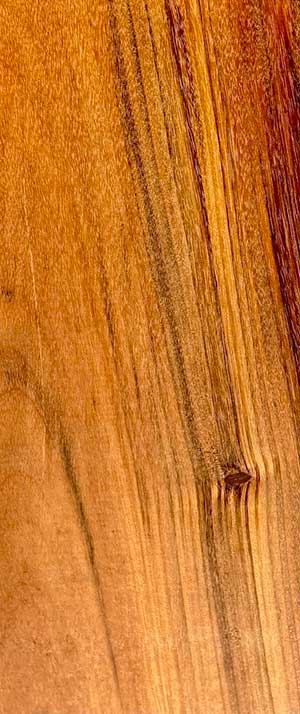
Fresh timber typically features a light golden-brown to vibrant reddish- orange background. Background colors naturally deepen and redden over time with light exposure, which can slightly reduce the contrast of the dark stripes.

Grain
Bold, irregular longitudinal streaks in dark brown to near-black run through the wood, creating the characteristic "tiger" pattern.

Texture
It possesses a high natural luster and a "metallic" or slightly oily appearance when finished.

Other Names
Other names here.

Typical Uses
Exterior: Premium decking, siding, and marine construction. Interior: Luxury hardwood flooring, fine furniture, and cabinetry. Specialty Items: Pool cues, archery bows, knife handles, and fine woodturning projects.
Weight
4.75
More info
lbs /Bd. Ft. | 29.4% heavier than red oak
Hardness
2160
More info
Janka Rating | 67.4% harder than red oak
Density
0.80
More info
Specific Gravity | 27% more dense than red oak
Strength, Stability, and Durability
Durability: It is naturally resistant to water, rot, decay, and insect attack (including termites and beetles), requiring no chemical preservatives. Stability: Once properly kiln-dried, it is dimensionally stable with very little movement or shrinkage.
Workability / Finishing
Machining: Its high density and interlocked grain can have a moderate to severe blunting effect on cutting tools. Carbide-tipped blades and bits are strongly recommended. Fastening: Due to its extreme hardness and risk of splitting, pre-drilling is mandatory for all screws and nails. Finishing: It glues easily and takes a high-gloss finish exceptionally well. For exterior use, a UV-inhibiting oil finish is required to prevent the wood from weathering to a silver-grey.