
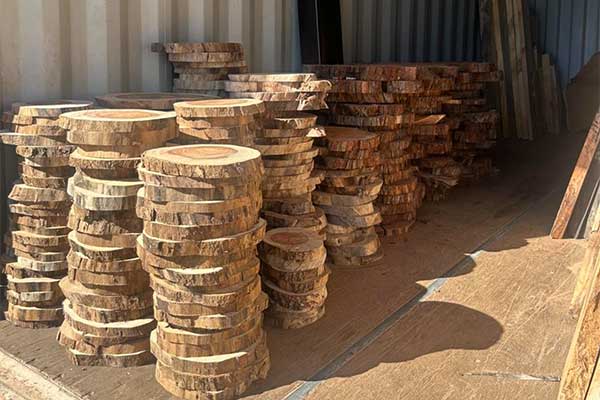

Color Range
The wood is mostly composed of creamy-white to light tan sapwood, with heartwood streaks ranging from light to dark reddish-brown.

Grain
"American Lacewood": When quartersawn, sycamore reveals highly prominent medullary ray flecks, creating a "freckled" or lace-like pattern often compared to lacewood or leopardwood.

Texture
It has a fine, close texture very similar to maple, but its grain is technically interlocked, which gives it a unique visual depth.

Other Names
Other names here.

Typical Uses
Decorative Interior: High-end cabinetry, floating shelves, and wall panels, where the quartersawn lace figure can be showcased. Culinary Items: Historically and currently used for butcher blocks, cutting boards, and kitchenware due to its shock resistance and lack of odor/taste. Specialty Woodworking: Drawer sides, musical instruments (as a tonewood), and small turned objects. Utility Use: Lower grades are often utilized for crates, pallets, and concealed furniture parts due to their resistance to splitting.