
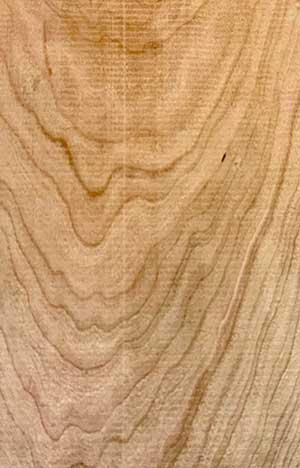

Color Range
The heartwood begins as a light pinkish-brown or creamy salmon hue. The sapwood is a pale, yellowish-white. Cherry is highly sensitive to light and oxygen. It undergoes a dramatic darkening process, often reaching 80% of its final rich reddish-brown color within the first 6 to 12 months.

Grain
It features a fine, closed grain and a satiny, uniform texture similar to maple.

Texture
It frequently contains small, dark "pitch pockets" or gum streaks, which are considered a natural beauty mark of the species

Other Names
Black cherry, Capulin, Cherry, Chisos wild cherry, Choke cherry, Edwards Plateau cherry, Escarpment cherry, Gila choke cherry, Mountain black cherry, New England mahogany, Plum, Rum cherry, Southwestern chokecherry, Whiskey cherry, Wild black cherry

Typical Uses
Fine Furniture: A premier choice for heirloom desks, tables, and cabinets. Interior Specialty: Frequently used for architectural millwork, molding, high-end doors, and musical instruments. Kitchenware: Popular for cutting boards, bowls, and wooden utensils due to its tight grain and non-toxic properties. Residential Flooring: Suitable for bedrooms or low-traffic areas where its warmth and luster are valued, though it is prone to denting in high-traffic commercial settings.