
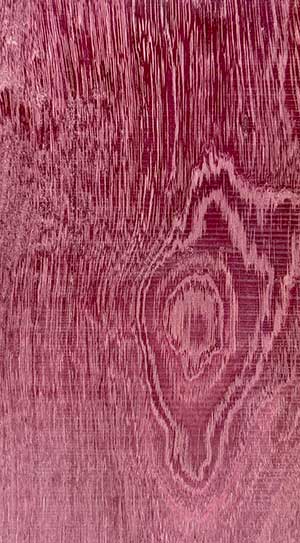

Color Range
Initial Color: When freshly cut, the heartwood is a dull grayish-brown. Oxidation: Within minutes to hours of exposure to air and light, it undergoes a rapid chemical reaction, transforming into a bright, vivid purple. Aging (Patina): Over time, continued exposure to UV light causes the wood to transition again, eventually settling into a dark brownish-purple or near-black. Using a UV-inhibiting finish can slow this process.

Grain
Typically straight, though it can sometimes be wavy or irregular.

Texture
It has a medium- to-fine texture with a good natural luster.

Other Names
Other names here.

Typical Uses
Accents and Inlays: Widely used as a decorative "pop" of color in cutting boards, jewelry boxes, and furniture inlays. High-End Accessories: It remains popular for custom pens, knife handles, and watch faces. Heavy Duty: Due to its rot resistance and strength, it is used for high-end decking, bridge joists, and boatbuilding. Tonewood: Used in musical instruments, such as guitar components and drums, for its resonance and tonal clarity