
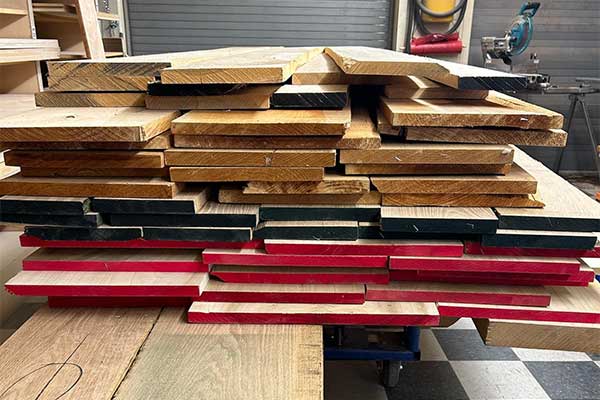

Color Range
American Beech (Fagus grandifolia): Typically darker and more varied in color, ranging from pale cream to a deep reddish-brown. It is often slightly coarser than its European counterpart. European Beech (Fagus sylvatica): Known for a more consistent light orangey-tan color and finer grain. It is frequently "steamed" during processing, which darkens the wood to a more uniform golden-brown hue.

Grain
American Beech: often slightly coarser than its European counterpart. European Beech: known for a finer grain.

Texture
Beech features a straight, tight grain and a fine, uniform texture. Quartersawn boards often display a distinctive "silvery fleck" or ray pattern.

Other Names
Other names here.

Typical Uses
High-Traffic Surfaces: Preferred for butcher blocks, workbenches, and factory flooring due to its resistance to impact and abrasion. Furniture: Used extensively for chair legs, frames, and bentwood designs. Culinary Tools: Popular for spoons, bowls, and cutting boards. Utility Items: Standard for tool handles, brush backs, and internal furniture components like drawer boxes.