
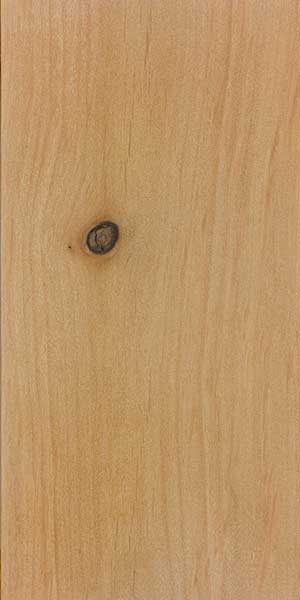

Color Range
It typically ranges from light tan to pale reddish-brown, with very little distinction between the heartwood and sapwood.

Grain
Unlike the rustic look of knotty alder, the clear grade offers a consistent, clean surface with few to no visible knots, mineral streaks, or burls.

Texture
It is a closed-grain wood with a fine, uniform texture that feels naturally smooth to the touch, similar to maple or birch.

Other Names
Other names here.

Typical Uses
Premium Cabinetry: Used for high-end kitchen and bath cabinets, particularly in modern, transitional, or formal designs where a smooth, consistent look is required. Fine Furniture: A cost-effective alternative for furniture legs, frames, and detailed carvings. Millwork and Doors: Frequently used for interior doors, moldings, and paneling due to its stability and elegant finish. Musical Instruments: Notably used for the bodies of high-quality electric guitars due to its balanced acoustic properties.