
Artizan Woodworkers Supply

Bubinga

Bubinga lumber, primarily sourced from West Africa, is a high-performance exotic hardwood renowned for its strength, rich coloration, and striking grain patterns. It remains a premier luxury choice for showpiece furniture and musical instruments, often serving as a larger and more affordable alternative to rosewood.

Color Range

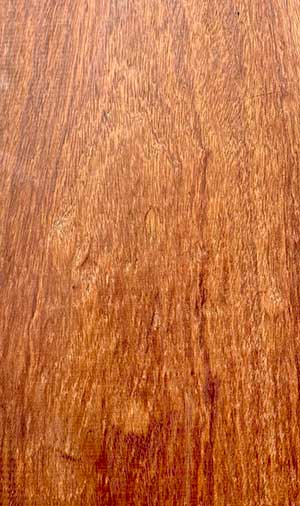
The heartwood varies from vivid pinkish-red to deep reddish-brown, accented by dark purple or black veins. Over time, it typically oxidizes into a rich burgundy hue.

Grain

Bubinga is highly prized for its diverse visual effects, including waterfall, pommele, flamed, and quilted patterns.

Texture

This specific term refers to rotary-cut Bubinga veneer, which displays a wild, swirling, and veined figure frequently used in luxury architectural installations.

Other Names

Other names here.

Typical Uses

High-End Furniture: Large dining tables, desks, and cabinetry. Musical Instruments: Highly sought after for acoustic and electric guitar bodies, bass necks, and drum shells due to its warm resonance. Specialty Items: Knife handles, luxury automotive interiors (e.g., Lexus), and fine woodturning projects like bowls and pens.

Weight

4.58

lbs /Bd. Ft. | 27.93% heavier than red oak (3.58 /bd. ft.)

Hardness

2628

Janka Rating | 103.72% harder than red oak (1290 psi)

Density

0.88

Specific Gravity | 37.50% more dense than red oak (.64)

Strength, Stability, and Durability

Strength and Stability: It features a high strength-to-weight ratio and excellent dimensional stability once properly seasoned. Durability: The heartwood is rated as durable to very durable, with natural resistance to decay, fungi, and termites.

Workability / Finishing

Machining Challenges: Due to its high density and occasional silica content, it can have a severe blunting effect on cutting tools; carbide-tipped blades are recommended. Interlocked Grain: While mostly easy to work, interlocked or wavy grain can cause "tearout" during planing unless a low cutting angle is used. Finishing and Gluing: It takes a high-gloss finish exceptionally well. However, natural oils and gum pockets can sometimes make gluing difficult; wiping surfaces with a solvent like acetone before gluing is a common 2026 professional practice.

It seems we can’t find what you’re looking for.
Scroll to Top