

Visual Appearance and Grading
-
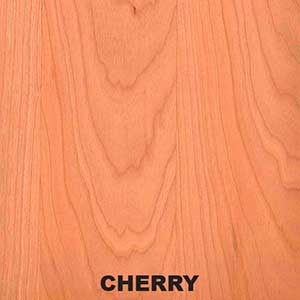
Unlike “rustic” or “natural” grades, cabinet-grade cherry is selected for a sophisticated, consistent look.
-
Select/Premium Grade: Features a uniform reddish-brown color throughout with grain matching to ensure a consistent pattern across cabinet faces. It minimizes “sapwood” (the lighter, creamy-white wood near the bark), though small amounts are occasionally allowed in profiled areas.
-
Reduced Defects: Cabinet grade allows fewer pin knots, mineral streaks, and gum pockets (small dark resin spots) than lower grades.
-
Texture: It has a famously smooth, satiny, and closed-grain texture that feels refined and “soft” to the touch.

Physical and Performance Characteristics
-
Hardness: With a Janka hardness of approximately 950–995 lbf, it is softer than maple or oak but harder than walnut. This intermediate hardness allows for highly intricate detailing and sharp, clean profiles in custom molding.
-
Stability: It is prized for its high dimensional stability and shock resistance, meaning it resists warping and cracking better than many other hardwoods once installed.
-
Workability: It is widely considered one of the best domestic woods for machining and sanding to a glass-like finish.

Finishing Versatility
-
“Raw” Matte Finishes: Heavy glossy lacquers have declined in favor of “raw” or matte finishes that emphasize the natural wood character.
-
Staining vs. Natural: While it takes stains beautifully, the trend is toward clear or
very light finishes that allow the natural oxidation process to show.
-
Blotching Prevention: Because it is a closed-grain wood, it can be prone to a “blotchy” appearance if stained improperly. Professionals recommend a “spray no-wipe” stain process or a sanding sealer before applying color.

Common Uses
-
Solid Lumber: Typically used for face frames, door rails, and stiles.
-
Cherry Plywood (Cabinet Grade): Features a high-quality cherry veneer bonded to a stable core (MDF or veneer core). This format is standard for large cabinet panels and shelving to provide better dimensional stability than solid wood planks.