
Artizan Woodworkers Supply

Hickory

Hickory is the strongest and hardest commercial hardwood native to North America, renowned for its extreme shock resistance and “rustic” visual character. It is physically
denser and stiffer than both white oak and hard maple.

Color Range

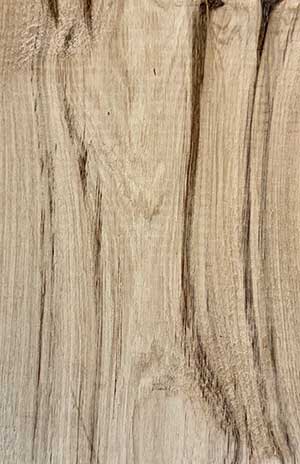
Color Contrast: Hickory is famous for its "Calico" look, featuring sharp contrasts between creamy-white sapwood and tan to deep reddish-brown heartwood.

Grain

The grain is typically straight but can be wavy or irregular, with a coarse texture similar to ash or oak

Texture

Rustic Character: Boards frequently contain natural "imperfections" like knots, mineral streaks, and "bird pecks" (small holes from sapsuckers), which are often celebrated in cabin-style or upscale farmhouse designs.

Other Names

Shellbark hickory, Hickory, Big shagbark hickory, Kingnut

Typical Uses

High-Impact Tools: The industry standard for axe, hammer, and pick handles. Sporting Goods: Used for drumsticks, lacrosse sticks, and traditionally for baseball bats and skis. Flooring & Cabinets: A top choice for high-traffic residential flooring and "distressed" or rustic kitchen cabinetry. Flavoring: Beyond construction, hickory is prized as a fuel for smoking meats due to its high thermal energy and distinct aroma.

Weight

4.16

lbs /Bd. Ft. | 16.20% heavier than red oak (3.58 /bd. ft.)

Hardness

1880

Janka Rating | 45.74% harder than red oak (1290 psi)

Density

0.64

Specific Gravity | Same as red oak (.64)

Strength, Stability, and Durability

Stability Warning: Hickory has a high shrinkage rate during drying. Because it is highly sensitive to humidity changes, it can warp or shrink more than other hardwoods if not properly seasoned and sealed.

Workability / Finishing

Machining Challenges: Due to its extreme density, hickory is notoriously difficult to work. It can quickly dull cutting tools and is prone to "tearout" or splintering if blades are not kept razor-sharp. Bending and Finishing: It is an excellent wood for steam-bending. While it takes stains well, its tight and varying grain can sometimes make it more challenging to finish uniformly compared to softer hardwoods

It seems we can’t find what you’re looking for.
Scroll to Top