
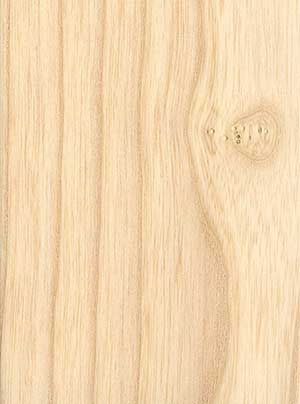

Color Range
The sapwood is creamy white to pale yellow, while the heartwood is typically light to medium grayish-brown. In ash, the transition between sapwood and heartwood is often very distinct. Ash maintains its light color well, though it may develop a slightly deeper golden hue over time with exposure to UV light

Grain
It features a bold, straight, and coarse grain. When flatsawn, it can show "cathedral" arches similar to red oak, but it lacks the large ray flecks found in quartersawn oak.

Texture
Texture note here.

Other Names

Typical Uses
Sports Equipment: Professional baseball bats, hockey sticks, and oars. Tool Handles: The standard choice for hammers, axes, and shovels due to its vibration-dampening qualities. Furniture: Widely used in mid-century modern designs and high-use restaurant seating. Millwork: Flooring, cabinetry, and interior doors where a clean, light aesthetic is desired.