
Artizan Woodworkers Supply

White Oak

White oak is a premium North American hardwood valued for its exceptional durability, water resistance, and refined appearance. While it shares many structural similarities with red oak, it is technically superior for exterior applications due to its unique cellular structure.

Color Range

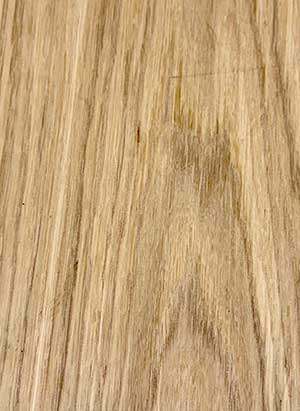
The heartwood is typically light to medium brown, often with a subtle olive or grayish cast. Unlike red oak, it lacks distinct pink or red undertones.

Grain

It features a straight, tight grain that is generally more uniform and "cleaner" than the dramatic arches found in red oak.

Texture

Ray Fleck: White oak contains large wood rays that produce a prominent "fleck" or "flake" pattern, especially when quartersawn. These rays are significantly longer than those in red oak, often exceeding 3/4 inch.

Other Names

Arizona oak, Arizona white oak, Cucharillo, Encino, Encino negro, Oak, Roble, Roble amarillo, Roble, colorado, Roble encino, Roblecito, White oak, Stave oak

Typical Uses

Outdoor: Boatbuilding, decking, and outdoor furniture. o Liquid Storage: Historically and currently the primary wood for whiskey and wine barrels (tight cooperage) due to its waterproofing tyloses. o Interior: High-end flooring, cabinetry, and furniture, particularly in Craftsman or modern styles. o Construction: Structural beams, railroad ties, and millwork.

Weight

3.92

lbs /Bd. Ft. | 9.50% heavier than red oak (3.58 /bd. ft.)

Hardness

1360

Janka Rating | 5.43% harder than red oak (1290 psi)

Density

0.68

Specific Gravity | 6.25% more dense than red oak (.64)

Strength, Stability, and Durability

Durability: Rated as highly durable and resistant to decay, it is the standard choice for boatbuilding and outdoor furniture.

Workability / Finishing

Machining: It machines well and is excellent for steam-bending. However, its high density can cause tool burning or chipping if blades are dull. Finishing: White oak takes stains and finishes well, though its closed pores mean stains may take longer to soak in compared to red oak. Iron Reaction: Like all oaks, it reacts with iron (especially when wet), which can cause permanent black or blue staining. Finishing: White oak takes stains and finishes well, though its closed pores mean stains may take longer to soak in compared to red oak.

It seems we can’t find what you’re looking for.
Scroll to Top