
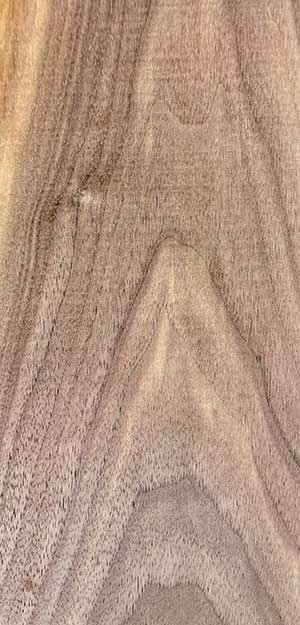

Color Range
The heartwood ranges from light pale brown to a deep chocolate brown, often featuring purplish, grey, or reddish undertones. In contrast, the sapwood is creamy white to pale yellow. Unlike many other hardwoods (such as cherry or oak) that darken with age, walnut naturally lightens over time when exposed to UV light, developing a lustrous, honey-toned patina.

Grain
Typically straight-grained but frequently exhibits dramatic figures like curls, crotches, and burls. Its texture is medium and falls between the prominent grain of oak and the uniform smoothness of maple.

Texture
Texture notes here.

Other Names
Other names here.

Typical Uses
Interior Design: Walnut is a top contender for luxury kitchen cabinetry and mid-tone furniture, prized for its ability to add depth and warmth without overwhelming a space. Specialized Uses: Due to its high shock resistance and strength-to-weight ratio, it remains the global standard for high-end gunstocks and is a popular tonewood for musical instruments like guitars and violins. Artisanal Projects: Its distinctive "live edge" (where the natural bark edge is preserved) makes it a preferred choice for statement tables and bar tops.