
Artizan Woodworkers Supply

Red Oak

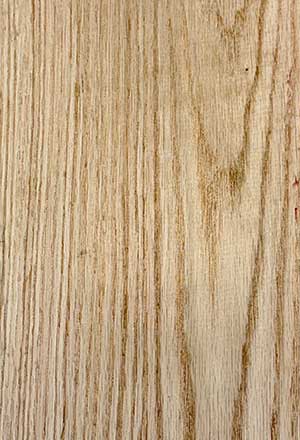
Red oak lumber is a ubiquitous American hardwood prized for its prominent grain, warm tones, and exceptional workability. While similar to white oak, red oak is distinguished by its more open cellular structure and reddish undertones.

Color Range

The heartwood ranges from light to medium brown with a distinct pinkish or reddish cast. Sapwood is typically white to very light brown.

Grain

It features a bold, coarse, and uneven grain. The wood is typically straight-grained, often displaying "cathedral" arches when flatsawn.

Texture

Red oak is "ring-porous," meaning it has large, open pores that are visible to the naked eye. Unlike white oak, these pores are not plugged with tyloses, which allows air (and liquids) to pass through the grain easily

Other Names

Northern red oak, Red oak, Gray oak, American red oak, Canadian red oak.

Typical Uses

Due to its strength and aesthetic appeal, red oak is a standard material for: hardwood flooring and stairs, interior cabinetry and furniture, architectural millwork and moldings, and veneers and plywood.

Weight

3.58

lbs /Bd. Ft. | Same as red oak (3.58 /bd. ft.)

Hardness

1290

Janka Rating | 0.00% softer than red oak (1290 psi)

Density

0.64

Specific Gravity | Same as red oak (.64)

Strength, Stability, and Durability

Strength: It is heavy, hard, and strong, with high crushing strength and medium bending strength. Durability: It is rated as non-durable to perishable regarding rot and insect resistance. Because of its open pores, it is not suitable for exterior use or tight cooperage (liquid- holding barrels). Stability: It has high shrinkage values during drying, which can lead to mediocre dimensional stability if not seasoned properly.

Workability / Finishing

Machining: Red oak is considered one of the best domestic hardwoods for machining, including planing, boring, and turning. Bending: It responds exceptionally well to steam-bending. Finishing: It takes stains and polishes very well. However, its large pores may require a wood filler if a completely smooth, glass-like finish is desired. Reactivity: The wood contains high levels of tannic acid, which can react with iron (especially in the presence of moisture) to cause black or bluish stains. Finishing: It takes stains and polishes very well. However, its large pores may require a wood filler if a completely smooth, glass-like finish is desired.

It seems we can’t find what you’re looking for.
Scroll to Top